
White County Criminal History Checks
Start by naming the record you need. A White County custody question belongs with the county jail roster. A filed White County misdemeanor or felony matter belongs with the Circuit Court Clerk, which keeps General Sessions and Criminal/Circuit records. A statewide Tennessee name check belongs with the Tennessee Bureau of Investigation. A sentenced felony offender or a person under state felony supervision belongs in the Tennessee Department of Correction system. These sources overlap, but none replaces the rest.
For White County records, gather the correct spelling, any former spelling, an approximate event year, and known case or offense tracking numbers. A date of birth can help an office distinguish common names, though a public form may not request it. Then preserve each date label. Offense, arrest, booking, filing, hearing, and release dates can refer to different steps.
- Check the county-linked BluHorse current inmate roster for present county custody.
- Ask the White County Circuit Court Clerk whether a charge stayed in General Sessions or moved into Criminal Court.
- Use a GS, CR, case, or OTN number to connect the booking row with the clerk file.
- Choose TORIS for a Tennessee name-based history or FOIL for state felony custody and supervision.
- Request a certified court disposition when the exact outcome must be established.
Four White County Record Channels
A single name can produce different results because each White County criminal record channel answers a distinct question. BluHorse reflects current local custody. The clerk docket reflects a court event or case. TORIS searches possible Tennessee fingerprint-supported history by the submitted name. FOIL deals with felony offenders in state custody or supervision. A blank result in one channel does not prove that all four are blank.
| Channel | Best use | Key limit |
|---|---|---|
| BluHorse | Current White County jail custody | Not a warrant or final-outcome search |
| Circuit Court Clerk | Local charges, events, judgments, and copies | Not a statewide rap sheet |
| TORIS | Tennessee name-based open-records history | Aliases are not included |
| TDOC FOIL | Felony custody, sentence, probation, or parole data | Not county pretrial booking data |
Read the product label before reading the result. The White County court file has the best evidence of a local prosecution’s disposition, while the White County jail profile preserves custody and intake facts that the judgment may never show.
Official Background Checks in Tennessee
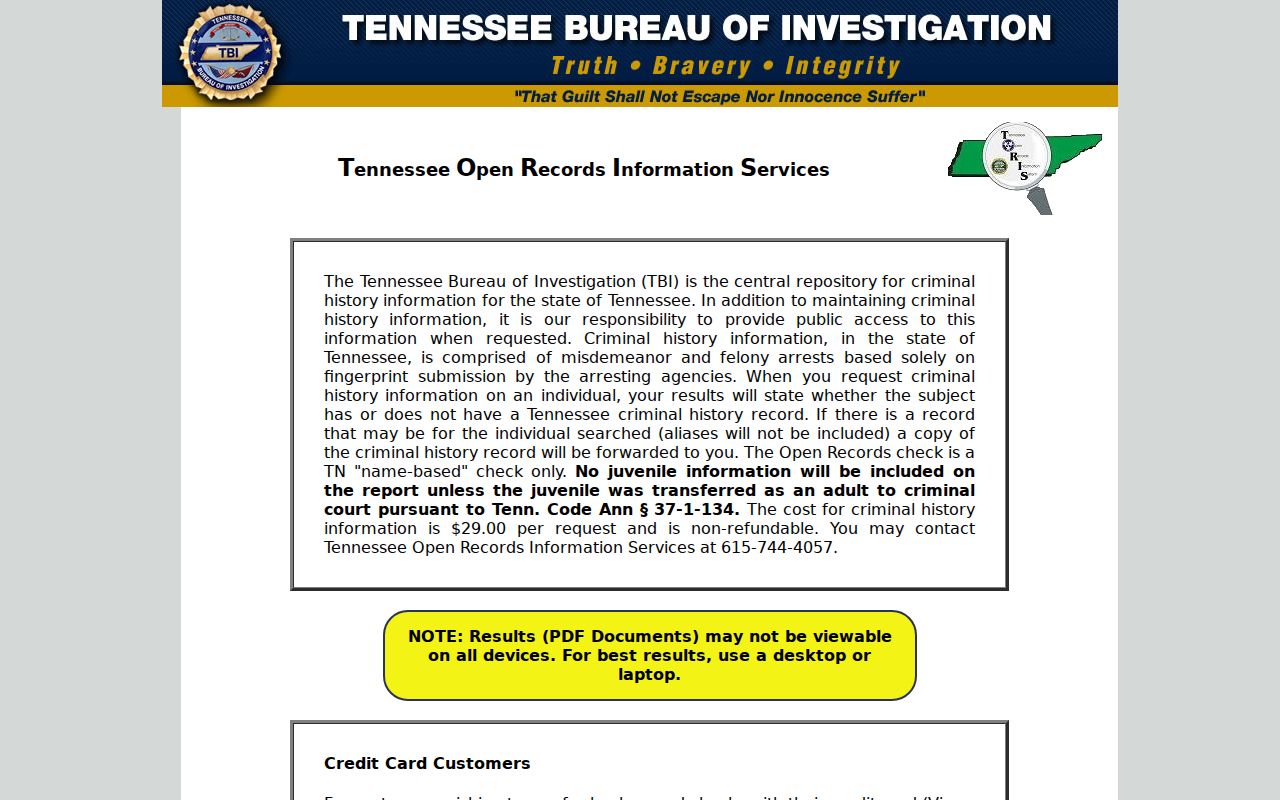
TORIS is the public Tennessee name check operated by the TBI Criminal Justice Information Services Division. A White County requester may order the Tennessee-only product for $29. The fee is nonrefundable. Online payment accepts Visa, MasterCard, or Discover. The paper route also accepts specified checks and money orders, while cash and American Express are not accepted. A personal check can add a seven-to-ten-day hold.
The result depends on the submitted identity and fingerprint-supported misdemeanor and felony arrest cycles reported to TBI. TORIS does not search aliases, does not supply an FBI history, and excludes juvenile information unless the case was transferred for adult prosecution under Tennessee law. TBI also warns that result PDFs may not display on every device, so a desktop or laptop is the safer choice.
The official TORIS screen shows the Tennessee search product and account path.
For a fingerprint check authorized by Tennessee law, the requesting agency supplies the OCA code and the person schedules electronic capture through TAPS at an IdentoGO/IDEMIA location. TAPS is not a public tool for checking another person at will. An FBI Identity History Summary is a separate subject-only nationwide process.
TORIS and White County Records
TORIS works best as a statewide comparison point after the local White County criminal case is identified. TBI builds the repository history from arrest fingerprints and later disposition reporting. A courthouse outcome can exist before the matching update appears in the repository. TBI materials also note that incomplete or unlinkable dispositions can be rejected. This is why the certified clerk record remains important when TORIS shows an arrest cycle with no clear result.
A possible White County match also calls for care. The $29 search is name-based, aliases are left out, and common names can produce doubt. If the official history appears to belong to someone else, TBI provides a challenge route based on fingerprints, a comparison request letter, and a $24 cashier’s check or money order. The agency then reports whether the challenged history is accurate.
Note: A TORIS report and a White County court file are related records, not duplicate copies of one master file.
Kinds of Criminal Records
White County criminal records begin with different creators. The Sheriff or Sparta Police Department writes an incident or arrest narrative. The jail creates a booking profile. A judicial commissioner or judge issues process, and the clerk preserves the related case record. TBI receives fingerprint-supported cycles and linked dispositions. TDOC maintains state felony custody and supervision data, while the TBI registry holds a separate statutory registration profile.
- Incident and arrest reports describe the agency response, allegations, place, dates, and officer action, subject to lawful redaction.
- Booking records contain intake identity, charge, bond, detainer, and custody fields.
- Court case files track formal charges, hearings, pleas, motions, judgments, sentences, and financial entries.
- Repository histories join fingerprint-supported Tennessee arrest cycles with dispositions that were reported and linked.
- Custody, supervision, and registry records answer narrower questions about jail, felony correctional status, or registration duties.
Juvenile records remain restricted, and an expunged record follows its own court-order process. For local case depth, the White County court case lookup explains the clerk’s calendar and file.
White County Jail Records Differ
The public White County BluHorse Current Inmate tab has First Name and Last Name filters and updates its list without a separate search button. A profile can display physical descriptors and charge rows with code, description, type, disposition, case number, OTN, and offense date. Detainer, bond, incarceration, inmate-information, and court tabs are marked secure. The Past Inmate side adds date and identifier fields but is credential-gated, so its “Books 24hr” control is not a proven public arrest blotter.
A current inmate result establishes that the person appears in White County custody at that time. It does not establish guilt, an outstanding White County warrant, or the final court result. If a result disappears, the person may have bonded out, been released, transferred, or otherwise left the jail. Check the White County clerk’s file for the outcome.
The official TDOC FOIL interface shows its name and identifier search choices.
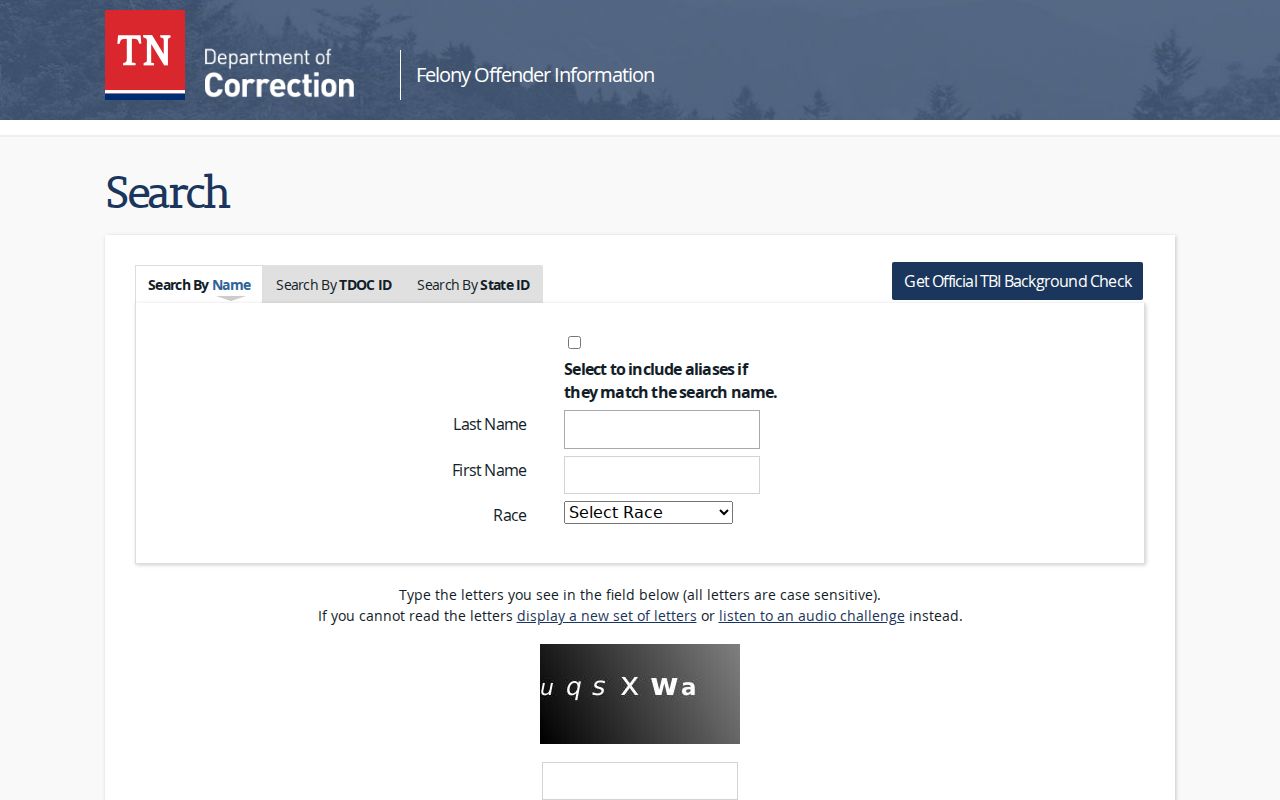
FOIL becomes the right source only after felony custody or supervision moves to TDOC. County jail, state correctional, and federal custody systems should never be treated as one roster.
White County Criminal Records: What They Contain
White County field names show what each record can prove. A booking profile emphasizes identity and intake. A docket emphasizes the prosecution and its stage. A repository history emphasizes an arrest cycle linked by fingerprints. Match the identifier and read the source’s date labels before drawing a conclusion.
| Name and identifiers | Name, birth date or descriptors, OTN, local case number, and agency identifiers as the source permits. |
|---|---|
| Arrest and booking data | Alleged charge, intake fields, offense date, bond, detainer, and custody details. |
| Charges and statutes | Charge wording, Tennessee Code reference, court level, and hearing type. |
| Disposition | Conviction, dismissal, acquittal, nolle prosequi, diversion, or another charge-level result. |
| Sentence | Confinement, probation, costs, restitution, and related terms in the judgment. |
| Custody or supervision | County custody, TDOC location, probation, parole, or release information in the proper system. |
A “disposition” is the result of one charge. “Nolle prosequi” means the prosecutor formally chose not to continue it at that time. A capias is court process directing custody, often after a missed appearance or failure to comply. None of these labels should be replaced with a guess based on bond or release data.
White County Warrant Record Fallback
No official public White County active-warrant name search, warrant list, or statewide Tennessee e-warrant lookup was found in the research. The correct fallback begins with the Circuit Court Clerk, which issues warrants and summons and maintains the General Sessions and Circuit record. The sheriff executes process and can address custody questions. Counsel can also obtain safe instructions for resolving a person’s own possible warrant.
A jail charge or detainer may reflect an executed warrant, but the current-inmate roster is not a list of outstanding process. Likewise, a docket entry for failure to appear or capias is tied to that case, not every warrant in White County. Ask for the case number, court, process type, and current status. Do not assume that an in-person arrival is the right next step before confirming surrender and bond procedure.
Note: Sealed process, juvenile material, and protected investigative facts may remain unavailable even when other case records are public.
Tennessee Public Access Laws
The Tennessee Public Records Act sets the baseline for state, county, and municipal records, subject to specific exceptions and a records custodian’s access policy. Court files also operate under Tennessee Supreme Court Rule 34 and local court procedure. Public does not mean unredacted. Protected victim or minor information, personal identifiers, juvenile records, expunged material, and lawfully confidential investigative content can be removed or withheld.
Key laws for White County records:
Tenn. Code Ann. §§10-7-503 and 10-7-504 set the access baseline and identify confidential records.
Tennessee Supreme Court Rule 34 defines judicial records and applies statutes, rules, and trial-court policies.
Tenn. Code Ann. §37-1-134 governs transfer of a juvenile for adult prosecution, the narrow context in which TBI says juvenile data may enter TORIS.
Tenn. Code Ann. §40-32-101 governs eligibility and procedure for expungement.
Tenn. Code Ann. §40-39-201 et seq. governs Tennessee registration, verification, and tracking duties.
Send each request to the creator of the record. The sheriff or police department holds its narrative, the clerk holds the prosecution file, TBI holds the state history and registry, and TDOC holds felony custody and supervision information.
White County Archives Hold Old Cases
Modern criminal operations cluster at the Justice Center on Depot Street, while historic civil and criminal files may be found at White County Archives in Courthouse Room 304, 1 East Bockman Way. The archive phone is 931-837-4066. This two-building route reflects White County’s courthouse history, from an early log courthouse and jail through later courthouse replacements and the modern division of current and old records.
When a current calendar or subscription system misses an older case, give the archivist the full spelling, approximate year, likely court level, and any GS, CR, or case reference. Ask the current clerk first when the date or court is unclear. Chancery Court also sits at the Bockman Way courthouse, but it is not the primary custodian for adult criminal prosecutions.
Note: Official sources do not publish a White County archive copy fee, so ask the custodian before ordering records.
Restricted, Sealed and Expunged Records
Tennessee uses expungement for the court-ordered removal or destruction of eligible records. Free-outcome categories listed by the Administrative Office of the Courts include dismissal, nolle prosequi, no true bill, acquittal, and arrest followed by release without charge. Eligibility is charge-specific. A retired charge must first reach the proper dismissed status, and a dismissal with costs may require payment or waiver action.
File in the court where the matter began. Get each docket and charge identifier from the clerk because a separate form or order may be needed for each charge. The entered order is distributed to the arresting agency, jail, TDOC, and TBI as required. Keep certified copies for future comparisons. Eligible diversion or conviction matters need added review, and not every misdemeanor or Class E felony qualifies.
The official Tennessee expungement steps explain the filing sequence. White County does not publish a complete local packet or a current countywide filing total, so confirm the right form and fee with the clerk.
White County Arrests Reach TBI
An arresting agency first creates the White County incident and arrest record. The jail then builds the booking profile. Fingerprints for reportable misdemeanor and felony arrests support the TBI arrest cycle. A judicial commissioner checks process and can set bond within the office’s authority. General Sessions receives the misdemeanor case or felony preliminary stage, and an indicted felony moves into Criminal/Circuit Court.
Record flow: Arresting agency › White County jail › General Sessions › Criminal/Circuit Court › TBI repository
The clerk and agencies later report dispositions, diversion, and expungement data for repository linkage. Timing and rejected links can cause a courthouse file and TORIS report to differ for a period. A dismissal also does not mean the booking never occurred. Retrieve the exact charge-level result and certified relief order before asking an agency to correct its copy.
The official Tennessee Public Case History screen shows statewide appellate coverage.
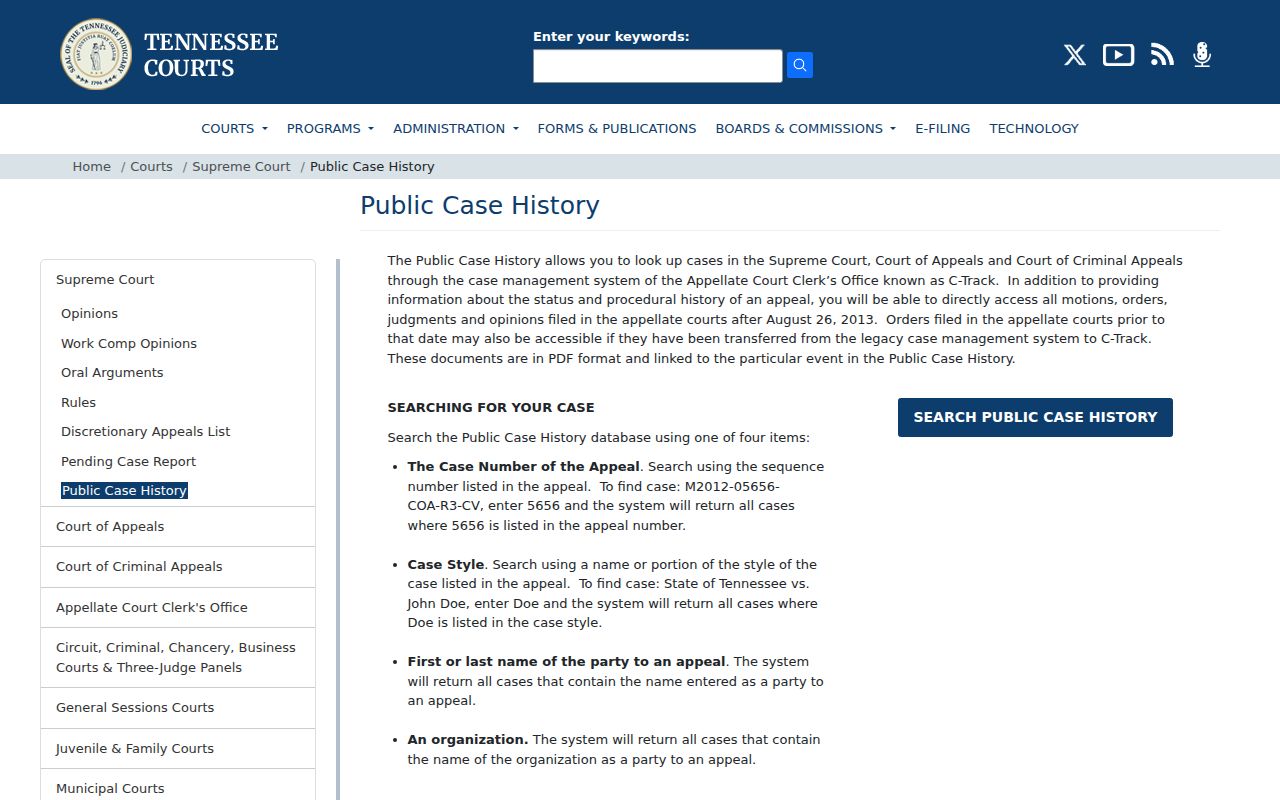
This search is for Tennessee appellate cases. It is not a free White County trial-court party-name database.
White County Court Program Records
White County sits in Tennessee’s 13th Judicial District with six other counties. The district has a named Veterans Treatment Court, while the White and Van Buren Family Treatment Court is a distinct juvenile and family program. A program’s existence does not mean every participant file is public. Access still depends on the court, case type, statutes, and governing rules.
The official account of the 13th District Veterans Treatment Court confirms the regional program. White County audit categories also show activity tied to Drug Court and Veterans Treatment Court, but those revenue totals are not a price list for one case or participant.
District Attorney General Bryant C. Dunaway’s main criminal office is in Cookeville, as is the District Public Defender. The prosecutor represents the state, and the defender handles appointed representation through the court. Neither office is a substitute for the clerk’s public case lookup.
City-by-City Criminal Records in White County
White County has only two incorporated municipalities. Sparta operates a police department and city court, so city reports begin with police while ordinance files begin with City Hall. Doyle has no independent police department or municipal court system; a recorded agreement routes ordinance enforcement through the White County Sheriff and General Sessions Court. The city routes are therefore different by design.
Sparta Record Check
Population 4,998. Sparta Police creates city reports, and City Court keeps ordinance records.
Doyle Record Check
Population 493. Sheriff enforcement and General Sessions replace a town police and court route.
City ticket payment is not a criminal case search. A city report can also lead to a county booking and county prosecution, so preserve the city citation or report number as well as the White County case identifier.
White County Justice by Numbers
White County’s estimated 2025 population was 29,612, spread across 376.68 square miles. The jail’s 2025 procurement material identifies 166 beds in three units: two male units with 58 and 62 spaces and one female unit with 46. Those facts describe the local system’s scale. They do not predict custody status or case outcome for any person.
TBI’s 2023 agency table attributes 333 offenses, 138 clearances, and 196 arrests to the White County Sheriff. Those are sheriff and county-agency figures, not a Sparta or Doyle crime rate. The difference matters because Sparta maintains its own police department while Doyle routes enforcement to the sheriff.
The official Middle District of Tennessee site explains the federal court layer.
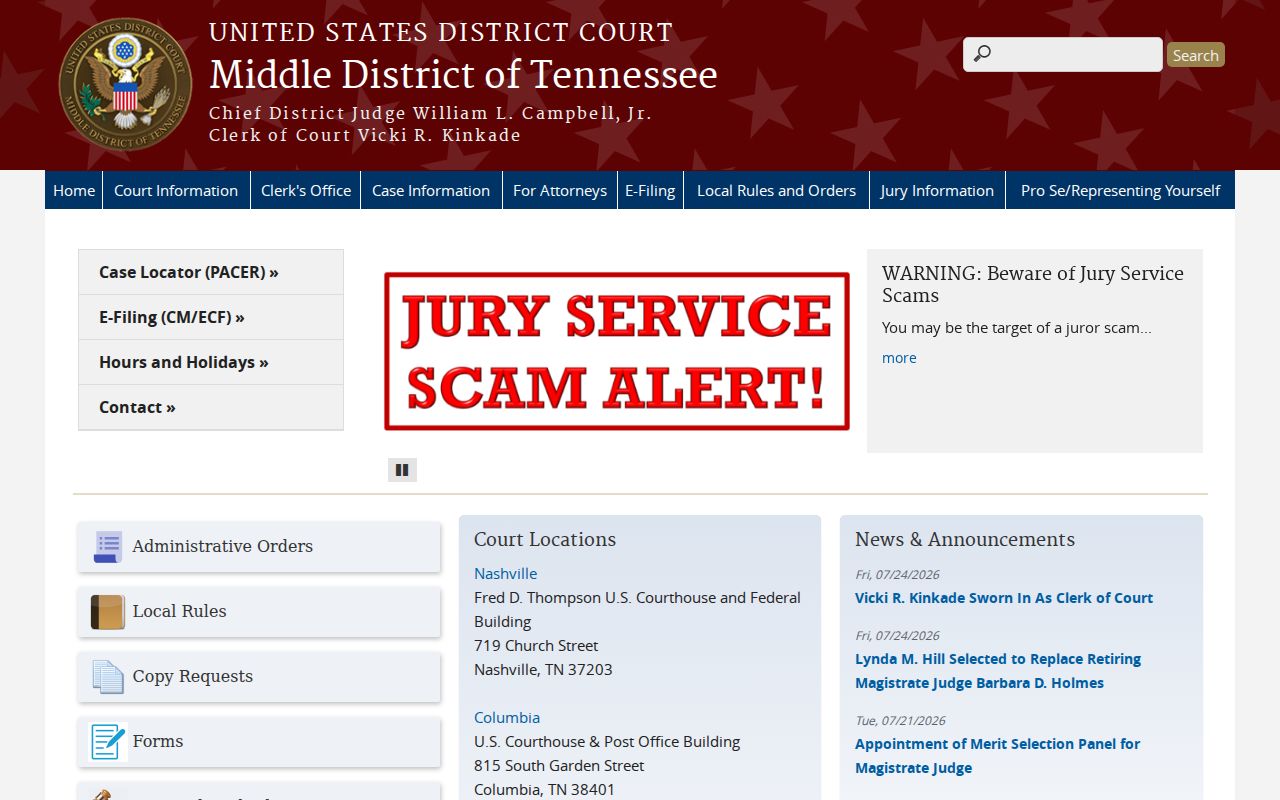
White County is in the federal court’s Cookeville division, but federal dockets are not held by the county clerk.
The official PACER service provides registered access to federal docket records.
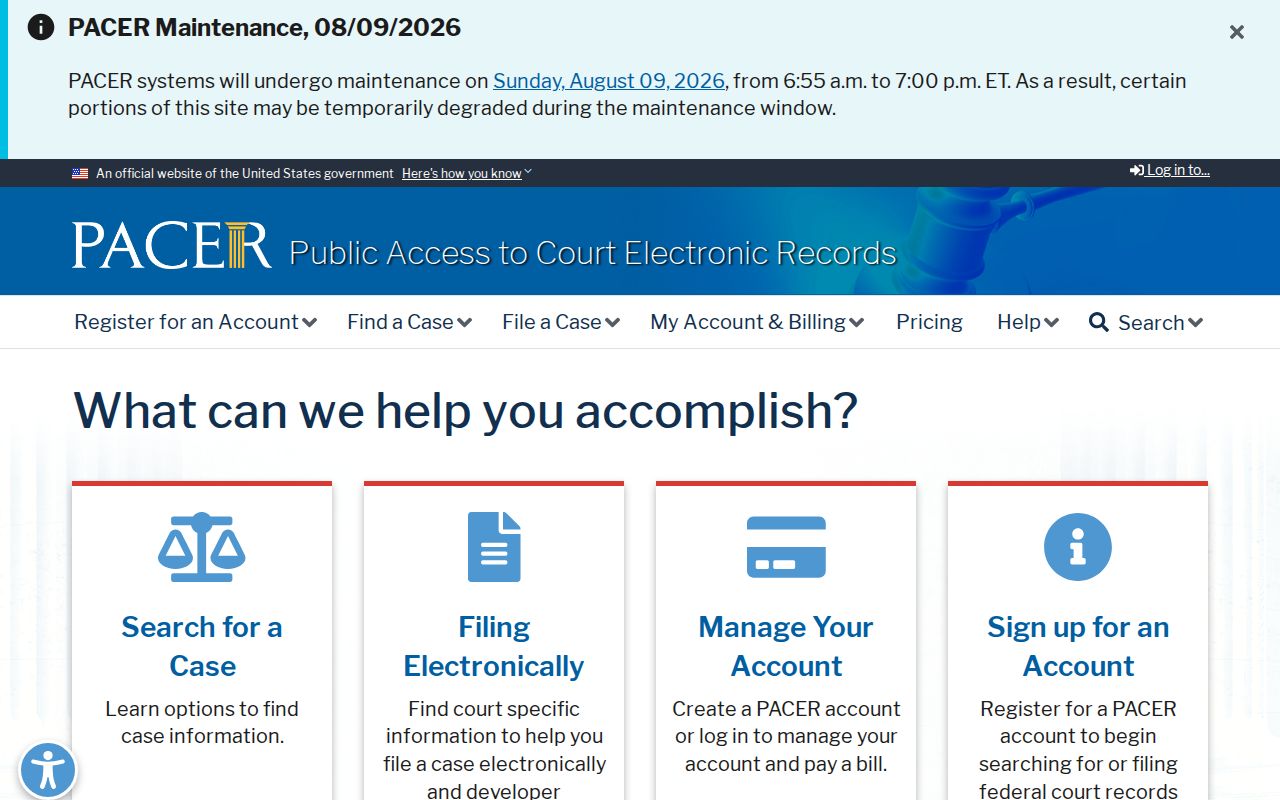
PACER covers federal filings. County criminal cases, jail records, TORIS histories, and registry entries remain in their own Tennessee channels.