
Criminal Court Cases in White County
White County uses one clerk counter for two key levels of adult criminal court. General Sessions hears misdemeanors and conducts the early stages of felony cases, including preliminary proceedings and process. An indicted felony moves to Criminal/Circuit Court in Tennessee's 13th Judicial District. The Circuit Court Clerk keeps both General Sessions and Circuit minutes and records, collects criminal fines, and issues warrants and summons. That overlap makes the clerk the sound first contact when a researcher does not yet know which level holds the file.
The criminal clerk is at the White County Justice Center, 111 Depot Street, Suite 1, Sparta, TN 38583. Call 931-836-3205 or fax 931-836-3526. The counter is open Monday through Friday from 8 a.m. to 5 p.m., remains open through lunch, and closes on weekends. Juvenile Court has a separate contact and restricted records. Sparta City Court handles city ordinance violations, so its files should not be confused with county misdemeanor or felony prosecutions.
The Tennessee Administrative Office of the Courts courthouse finder confirms the court locations used in White County.
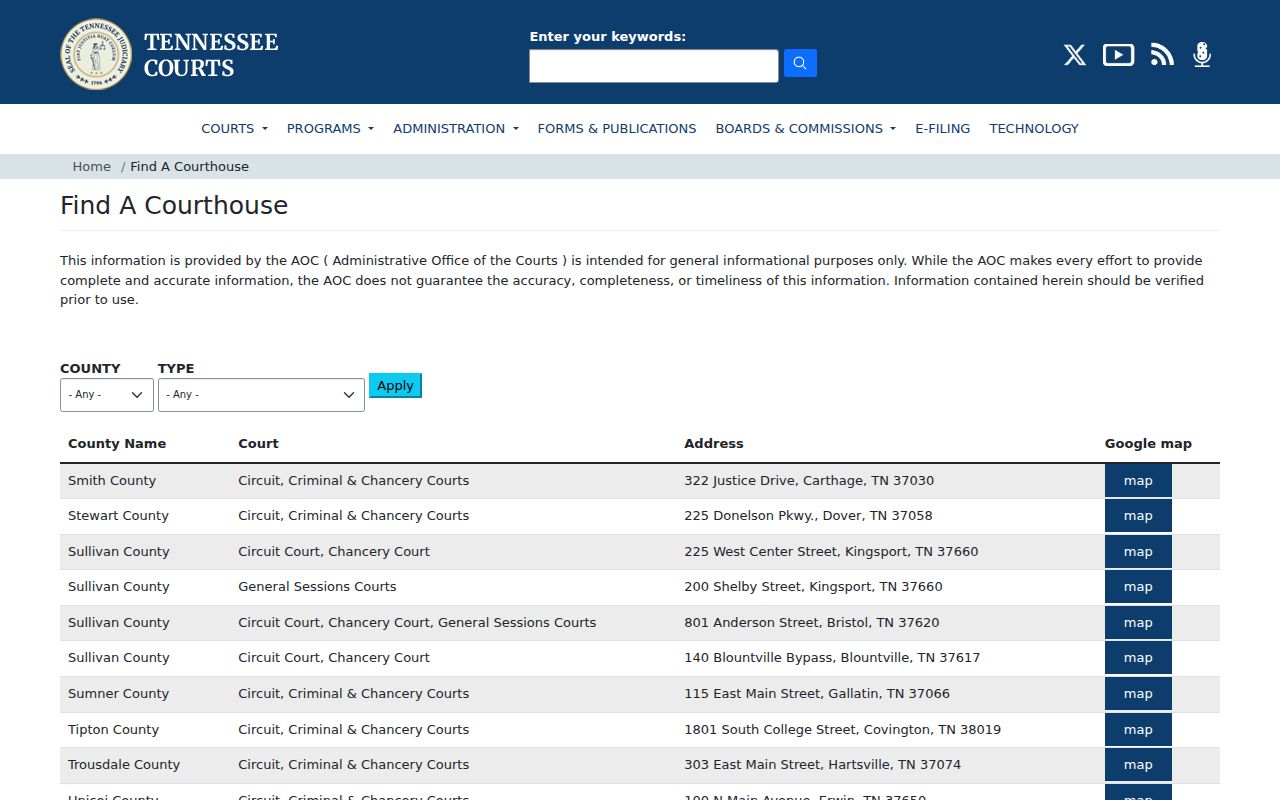
The finder helps confirm the correct office before a phone or counter request, while the clerk remains the record custodian.
Which White County Court File?
In White County, the charge level and procedural stage point to the right file. General Sessions is the place to ask about a misdemeanor, a first appearance, a preliminary felony matter, or a warrant-related docket entry. When a felony is bound over and indicted, Criminal/Circuit Court holds the later events. Ask the White County clerk whether both a General Sessions reference and a Criminal Court number exist. Keeping both identifiers prevents a search from ending at the preliminary file when the prosecution continued.
| Office | Record held | Contact |
|---|---|---|
| General Sessions | Misdemeanors, felony preliminary stages, warrants and process | 111 Depot St., Suite 1; 931-836-3205 |
| Criminal/Circuit Court | Indicted felonies and general-jurisdiction criminal files | Same clerk and counter |
| County Archives | Historic civil and criminal court records | 1 E. Bockman Way, Room 304; 931-837-4066 |
| Sparta City Court | City ordinance violations | 6 Liberty Square; 931-836-3248 |
White County Case Record Searches
No unified free Tennessee trial-court name search was found, and White County does not publish a confirmed free party-name document database. The clerk's calendar offers scheduling context. Tennessee Court Information is a subscription channel linked by the clerk. Use these tools to locate a lead, then ask the clerk for the complete docket and the documents needed to confirm the result.
- Gather the full name, approximate filing or arrest year, charge, and any GS, CR, case, or OTN reference.
- Call or visit the Circuit Court Clerk and ask whether the case remained in General Sessions or moved after bindover or indictment.
- Check the published White County docket or subscription service for the court date, hearing type, and local number.
- Ask for the docket entries, disposition for each charge, judgment, sentence, and any plain or certified copies required.
- For an older matter, give the Archives the name spelling, rough year, court level, and every known case reference.
| Search detail | Format | Why it helps |
|---|---|---|
| Full name | Text | Supports clerk and archive index checks |
| Approximate year | Year or date range | Narrows calendars and older files |
| Case identifier | GS, CR, OTN, or local number | Links preliminary, booking, and trial records |
| Charge | Description or TCA code | Separates similar names and multiple cases |
| Court level | General Sessions or Criminal/Circuit | Directs the request to the right docket |
The Tennessee Court Information service presents its subscription access point rather than a free White County party-name search.
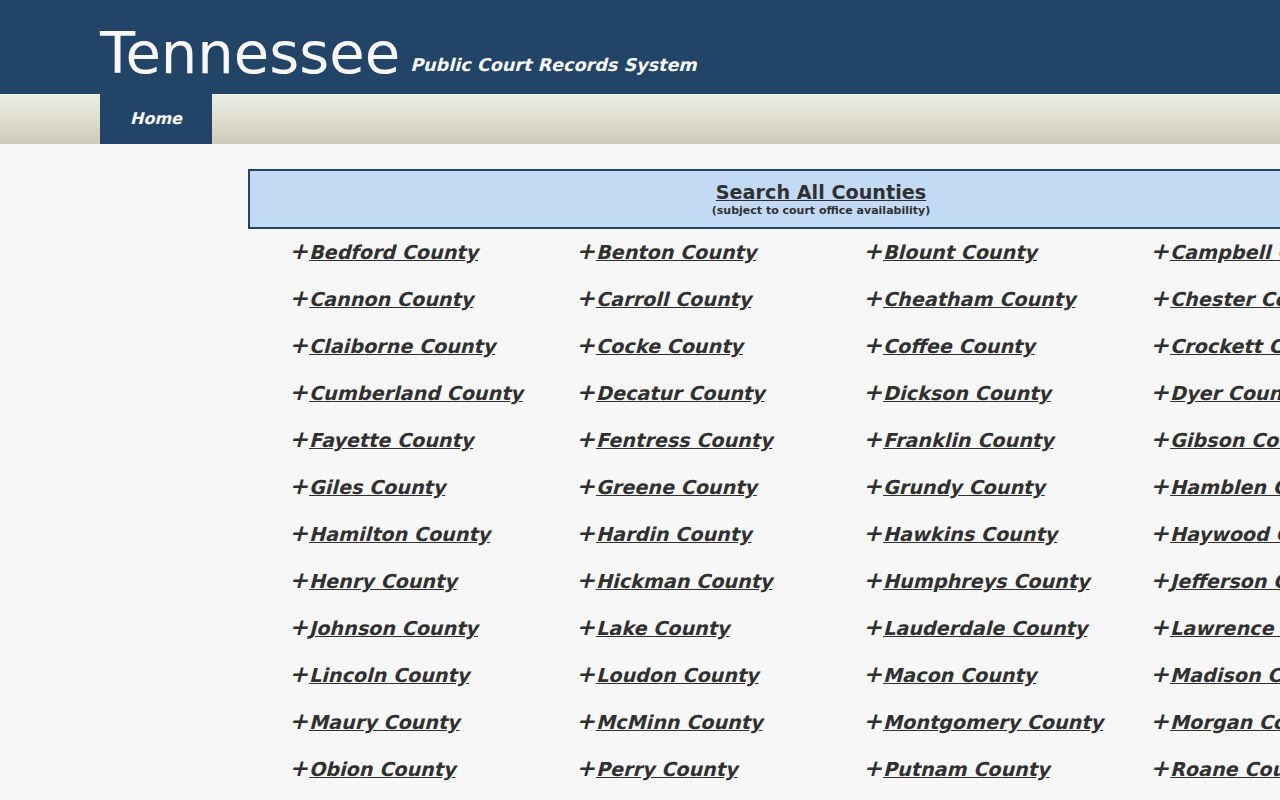
Its access gate reinforces why the clerk phone and counter routes remain central for White County case research.
Read White County Criminal Dockets
A published White County criminal docket uses a local pattern such as 93CC1 YYYY CR ####. A General Sessions, traffic, or legacy criminal reference may also appear. The header can state the court, docket date and time, judge, and whether the setting is jury or non-jury. A charge row may identify the Tennessee Code provision, hearing type, attorney or public defender, officer, bond type, bond amount, and a later appearance date.
Labels need context. A capias is court process directing custody, often after a failure to appear or comply. A pending grand-jury or pick-up-indictment line shows a procedural step, not a final result. Diversion, probation, or Community Corrections violation entries are hearings about compliance. None alone establishes the final judgment. The county warns that its calendar is offered as is and does not promise completeness, accuracy, or timeliness. Read each charge through its disposition.
What a White County Case File Contains
The full White County file is broader than the calendar. It can identify how the charge entered court, record motions and hearing events, and show the disposition and sentence. Ask for specific documents instead of assuming the online line item contains the whole story.
Use the White County docket sheet as the index to the file. A complaint records a sworn allegation. An indictment is the grand jury's formal felony charge. A plea is the accused person's formal response, while a judgment states the court's result. If several charges share one case number, request the outcome for each count. One count may be dismissed while another ends in conviction, and a one-line case summary may hide that distinction.
| Case number and court | The local identifier, court level, and any linked General Sessions or legacy reference. |
|---|---|
| Charging document | The complaint, indictment, information, or other filed instrument that states the charge. |
| Docket entries | Filed events, motions, appearances, continuances, and orders recorded by the clerk. |
| Hearing dates | Past and scheduled settings with the hearing type and available notes. |
| Disposition and judgment | The charge-level outcome, such as conviction, dismissal, acquittal, or nolle prosequi. |
| Sentence and conditions | The court's punishment, supervision, restitution, and other terms when a conviction occurs. |
White County Calendar Versus File
A White County calendar tells the reader when a matter is set and why it appears on that day's docket. It does not show all pleading PDFs, a complete financial ledger, every earlier disposition entry, or the detailed sentence. Bond fields also describe pretrial security and conditions, not punishment. A docket line can remain pending while later orders sit elsewhere in the clerk file.
When the outcome matters, request a charge-by-charge disposition or certified judgment. A dismissal, acquittal, or no true bill is not a conviction. Likewise, a booking-system outcome is not the clerk's certified result. The related White County arrest search can explain the booking side, but the court file controls what the prosecution did after arrest.
Criminal Case Stages in White County
A White County prosecution begins when a charge is filed in the proper trial court. General Sessions handles a misdemeanor to conclusion or conducts the early felony stage. A felony may then go to the grand jury and move into Criminal/Circuit Court after indictment. Pleas, motions, trial settings, judgments, and sentences become distinct docket events. Exact timing is case-specific and was not published as a standard county schedule.
In a White County case, arraignment is the formal appearance when the charge is addressed and a plea may be taken. Pretrial work can include motions, attorney deadlines, continuances, and negotiations. A plea agreement is a proposed negotiated result that still requires court action. After a plea or verdict, disposition identifies the outcome and sentencing states the ordered punishment or supervision. Those terms help separate a pending event from the final record.
Case flow: Charges Filed › Arraignment › Pretrial › Plea or Trial › Disposition › Sentencing
Older White County Criminal Cases
When the current White County calendar and subscription route do not cover a case, contact White County Archives. The Archives occupies Courthouse Room 304 at 1 East Bockman Way in Sparta and can locate historic civil and criminal court records. Call 931-837-4066. Provide every fact that can narrow the index, including alternate name spellings, an approximate year, the likely court level, and a GS, CR, or case number.
This split reflects White County's courthouse history. Modern criminal operations cluster at Depot Street, while historic files remain at Bockman Way. The county seat moved from Rock Island to Sparta, with courthouse and jail buildings dating through several eras before the modern courthouse. The practical result is a two-building search, not proof that an old case has vanished.
White County Case Record Access
Tennessee Supreme Court Rule 34 defines case, administrative, and judicial records and places access within governing statutes, court rules, and trial-court policies. The Tennessee Public Records Act also supplies a public-record framework. Open access does not mean that every field is shown. Protected victim or minor information, confidential identifiers, juvenile records, sealed or expunged material, and lawfully protected investigative facts may be withheld or redacted.
The official Rule 34 text is the direct source for Tennessee judicial-record access.
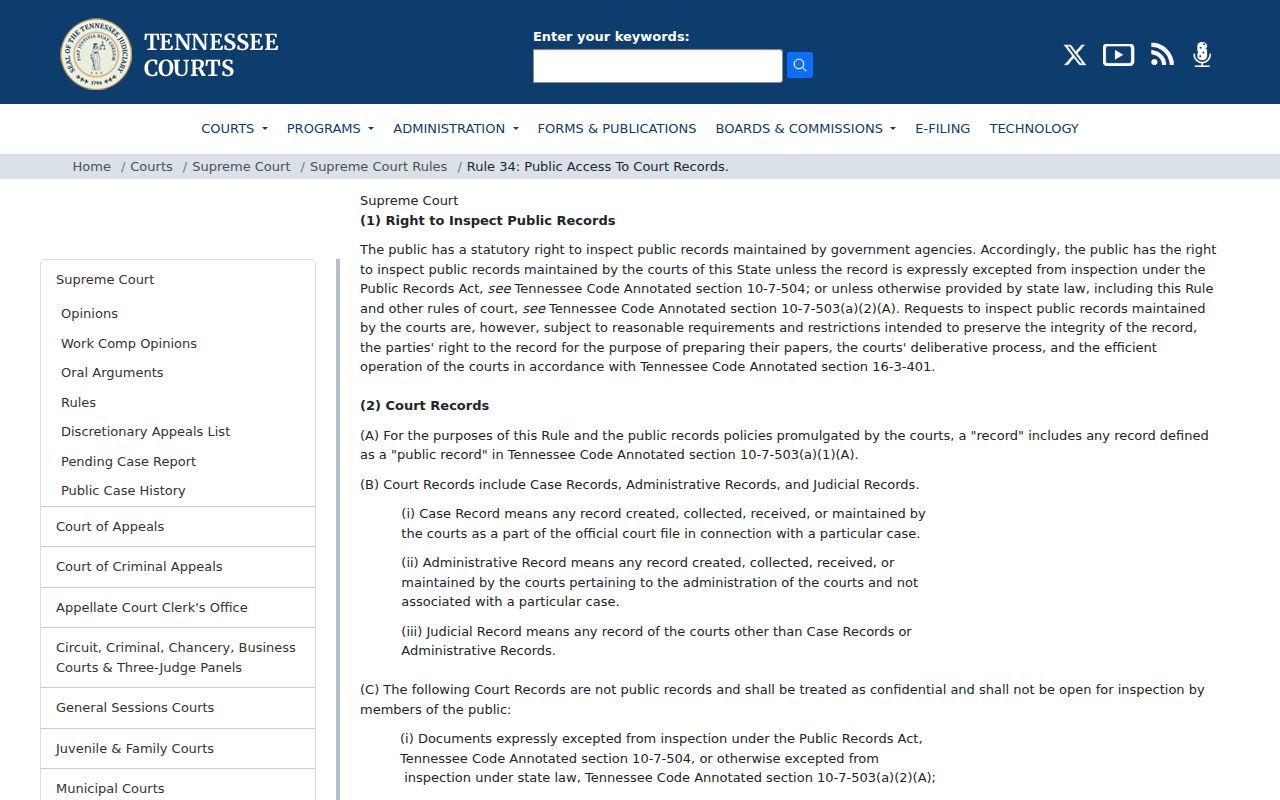
Ask the White County clerk whether a missing item is redacted, restricted, archived, or simply outside the calendar view.
Expunged White County Case Records
Eligible outcomes can support expungement under Tennessee Code section 40-32-101. The official process starts in the court where the case arose and works charge by charge. Dismissal, nolle prosequi, no true bill, acquittal, and arrest followed by release without charge are among the free-outcome categories described by the Administrative Office of the Courts. Diversion and conviction cases require added eligibility review.
The Tennessee expungement filing steps explain how to obtain docket details and submit the court paperwork.
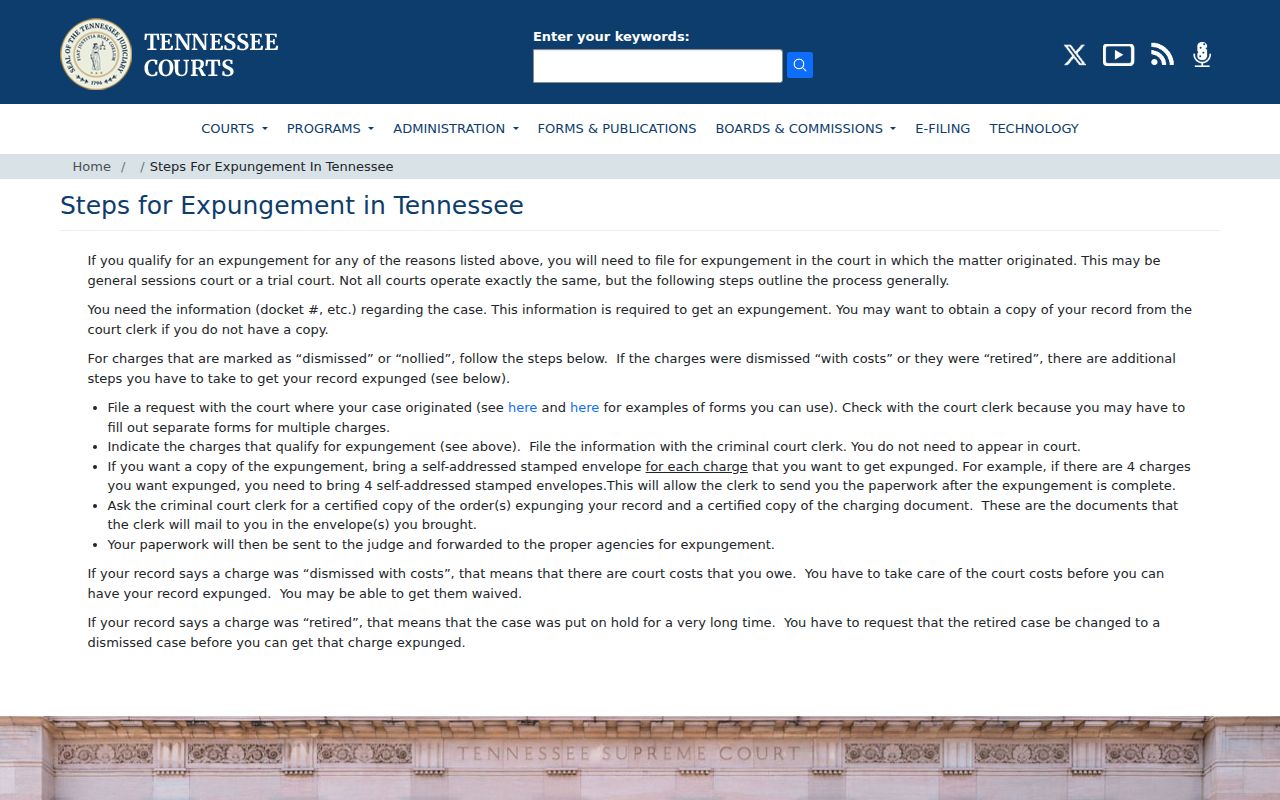
Keep certified copies of the entered order and verify the update with both the White County clerk and TBI, since linked systems may not change at the same time.